Crossing the Mont Blanc tunnel from France into Italy, you don’t just change countries-you shift atmospheres. On the Italian side, Courmayeur wraps you in warm stone buildings, the scent of espresso, and a rhythm that feels unhurried, despite the towering peaks all around. It’s not about escaping the mountains, but embracing them with a different spirit-one that leans into tradition, flavor, and quiet confidence. This isn’t just another alpine stop; it’s a destination where alpine authenticity meets Italian ease.
The authentic appeal of the Aosta Valley
Traditional architecture and mountain vibes
Walking through Courmayeur’s center, you’re immediately grounded by its
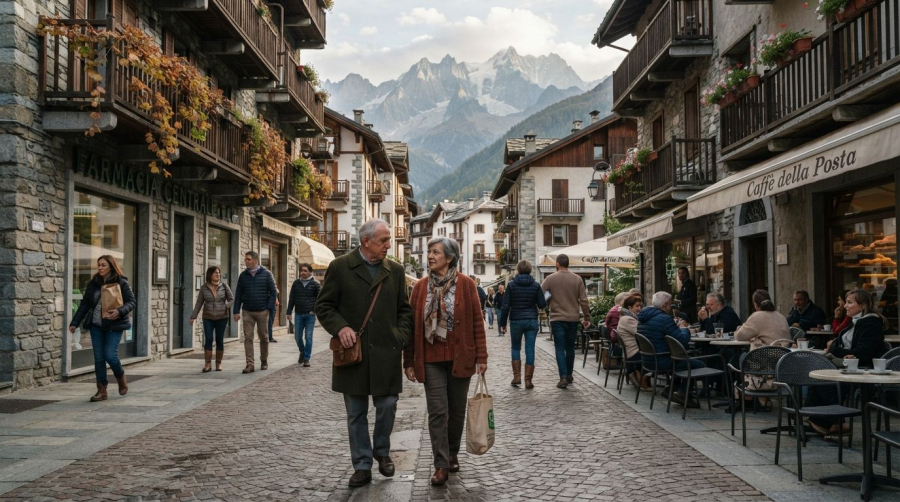
texture: cobbled streets, wooden balconies spilling with geraniums, and buildings made of larch and stone that have weathered decades of alpine winds. The heart of town, centered around Via Roma, feels deliberately preserved-car-free, intimate, and oriented around local life rather than mass tourism. Unlike the more commercialized fronts of some neighboring resorts, Courmayeur maintains a sense of place. Its architecture isn’t themed; it’s inherited. Generations of Aostan stonemasons and carpenters shaped these structures, and their craftsmanship still defines the skyline.
Organizing your crossing from the French side is seamless, as a professional Geneva Chamonix taxi can easily drop you at the entrance of the Mont Blanc tunnel. From there, the drive into Courmayeur takes under 30 minutes, with the road winding through dramatic rock faces and sudden panoramic views of the southern flank of Mont Blanc. The transition isn’t just geographic-it’s cultural.
Italian hospitality vs the French side
Compared to Chamonix’s fast-paced, international energy, Courmayeur operates on a different pulse. Locals greet you with a warmth that doesn’t feel performative-it’s baked into the way they run their shops, serve espresso, or recommend a lesser-known trail. There’s a pride in their valley, not in a boastful way, but in the care they give to small details: hand-labeled wine bottles at the enoteca, homemade preserves in the alimentari, or the way a waiter remembers your table from yesterday. It’s the dolce vita translated to alpine altitude-slower, richer, more intentional.
- Car-free town center charms
- Family-run alpine boutiques
- Views of the Brenva glacier
- Local artisan craftsmanship
The Aosta Valley has long been autonomous, and that independence shows in how it preserves its language, cuisine, and customs. While French influence is strong on the northern side of Mont Blanc, here, Italianità reigns-with a distinct Aostan twist. Bilingual signs mix Italian and French, but the food, the pace, and the spirit are unmistakably southern. You feel it in the way meals stretch into hours, or how the afternoon passeggiata down Via Roma becomes a quiet ritual of connection.
Outdoor adventures between peaks and valleys
Skiing and climbing in the Italian Alps
Courmayeur’s ski area is part of the vast Dolomiti Superski network, but its character is distinct. The slopes here face north and northeast, which means reliable snow cover and less midday glare-ideal for long winter days on the mountain. The resort is less about sheer size and more about diversity: tree-lined runs for intermediates, steep couloirs for experts, and gentle nursery areas for beginners. The Skyway Monte Bianco cable car doesn’t just offer access to high-altitude skiing-it’s a destination in itself, rising from 1,300 meters to over 3,400 meters in stages, delivering you to the very edge of the glacier.
Climbers and mountaineers find Courmayeur especially compelling. It’s the starting point for ascents of the Géant du Tacul and the Col du Midi-routes that feed into the legendary Tour du Mont Blanc. The Italian side sees fewer technical climbers than Chamonix, which means quieter routes and a more personal connection to the terrain. But don’t mistake that for lack of challenge. The southern face of Mont Blanc is steep, exposed, and demands respect. Local guides emphasize safety and preparation, often adjusting plans based on snowpack stability and weather windows.
Hiking through Val Ferret and Val Veny
In summer, the valley floors open up into lush corridors of hiking trails, each with its own personality. Val Ferret is quieter, more remote, and deeply scenic-its path follows the TMB route past alpine lakes and grazing herds of rehalms, the hardy Aostan cattle. You’ll pass old stone mayens (seasonal huts) now converted into mountain restaurants, serving polenta concia and local raclette. The trail gains elevation gradually, offering panoramic views of the Brenva Glacier and the jagged Punta della Sentinella.

Hikers on the Val Ferret trail, with Mont Blanc’s southern face in the background.
Val Veny, on the other hand, is more accessible and popular with families. It runs along the base of the Grandes Jorasses, offering close-up views of the north face-a magnet for photographers and climbers alike. The trail is well-marked, with frequent rest stops and refuges. One of the most rewarding day hikes leads to the Lago Bianco, a glacial lake reflecting the surrounding peaks like a mirror. Unlike the busier trails near Chamonix, these paths rarely feel crowded, even in peak season.
Essential guide to Courmayeur services and stays
Top-tier accommodations and mountain huts
Courmayeur’s lodging reflects its dual identity: rustic charm meets understated luxury. At the high end, properties like Hotel Excelsior and Grand Baita offer alpine elegance with modern comforts-fireplaces, spa treatments, and panoramic balconies. These aren’t flashy resorts; they’re family-run, with generations of local knowledge woven into the service. Staff might recommend a hidden fondue spot or the best time to hike to avoid fog.
For those seeking authenticity, the refugi system offers a more immersive experience. High-altitude mountain huts like Rifugio Elena or Rifugio Bertone provide basic dormitory stays with hearty meals and unbeatable sunrise views. Reservations are essential in July and August, and many require a 2- to 3-hour hike to reach-adding to the sense of adventure.
Culinary stops you cannot miss
Food in Courmayeur is a quiet revelation. The Aosta Valley has its own culinary canon, shaped by centuries of isolation and necessity. Fontina cheese, made exclusively here, is the star of many dishes-melted into fonduta, layered in piatto valdostano, or served raw with honey. You’ll also find seupetta, a rich barley soup once used to sustain shepherds, now elevated in gourmet settings.
Dining isn’t just about tradition, though. The town has earned Michelin recognition for several restaurants, including Lo Scuron and View, where chefs reinterpret alpine ingredients with precision and flair. Even casual spots serve wine from local vineyards-petit rouge, a light red, or blanc de Morgex, a crisp white grown at high altitude.
Planning your trip logistics
Knowing when and how to travel makes a difference. Winter runs from December to April, with peak season in February. Summer hiking season begins in June and extends through September. July and August bring the most visitors, so booking accommodations and guides three to four months in advance is wise.
| Activity | Winter (Dec-Apr) | Summer (Jun-Sep) |
|---|---|---|
| Skiing & Snowboarding | Extensive ski area, reliable snow | Not available |
| Hiking & TMB stages | Limited, snow-covered | Full access, clear trails |
| Skyway Monte Bianco | Open, winter views | Open, summer access |
| Gourmet events | Truffle festival in Feb | Cheese festival in Aug |
Public transport exists but is limited. The local bus connects Courmayeur with nearby villages, but frequency drops off-season. For flexibility, especially with luggage or gear, private transfers are a worthwhile investment. They’re particularly useful for hikers completing stages of the TMB who want their bags moved ahead.
Savoring the Italian Side: A local's perspective
The Skyway Monte Bianco experience
Riding the Skyway Monte Bianco is more than transportation-it’s a ritual. The new cable cars rotate slowly as they climb, giving you a 360-degree view of the Mont Blanc massif. Inside, the cabin is quiet, almost reverent, as if everyone senses they’re ascending into something sacred. At Punta Helbronner (3,466 m), the wind hits hard, but the panorama is unmatched: the Mer de Glace sprawls below, the Dent du Géant looms to the east, and on clear days, you can see all the way to the Swiss Alps.
The upper station houses a modern restaurant and an observation deck, but many visitors simply stand in silence, absorbing the scale. It’s one thing to see Mont Blanc from afar; it’s another to stand on its shoulder. Locals use the Skyway less for tourism and more for access-skiers descending from the Vallée Blanche route, or climbers preparing for the Grand Pic. But everyone agrees: the view from the top changes you. It’s not just the altitude-it’s the clarity.
The most common questions
How does the skiing in Courmayeur compare to the Chamonix valley?
Courmayeur’s ski area is smaller but more intimate, with slopes that face north for consistent snow quality. It’s less crowded than Chamonix, and the runs tend to be more sheltered, making it ideal for families or those avoiding high-traffic zones. The terrain is varied but generally more forgiving, with fewer extreme descents. That said, advanced skiers can access the Vallée Blanche via the Skyway, linking into one of the most iconic off-piste routes in the Alps.
What happens to your luggage after completing a TMB stage here?
Many hikers opt for luggage transfer services between stages. After finishing a leg in Courmayeur, your bags can be picked up at your accommodation and delivered to your next stop-often a refuge or hotel-by the following day. This service is widely available through local providers and eliminates the need to carry heavy packs. Just ensure you book in advance, especially during peak season, as capacity is limited.
When is the best time to visit to avoid the peak tunnel traffic?
The Mont Blanc tunnel sees the heaviest use in mid-July to late August and during February ski holidays. To avoid congestion, aim for early June, late September, or mid-week departures. Weekends, especially Fridays and Sundays, bring the most cross-border traffic. Early morning crossings-before 8 a.m.-are also significantly smoother, whether you’re driving or taking a private transfer.
Are there family-friendly activities beyond skiing and hiking?
Absolutely. Courmayeur offers sledding parks, indoor play centers, and gentle snowshoeing routes suitable for children. The town also hosts seasonal events-Christmas markets, summer festivals with live music, and weekly farmers’ markets. The Parco Naturalistico Mont Blanc has educational trails with interactive signs, perfect for curious kids. Even the Skyway Monte Bianco has family-friendly hours with reduced wait times and kid-oriented guides.
